
Manufacturer Direct Sales Channel India: Blinkit, ONDC or Own Website?
Manufacturers going direct face the same question: which channel first? The honest breakdown of what each actually delivers — and which one to start with.
4/28/2026
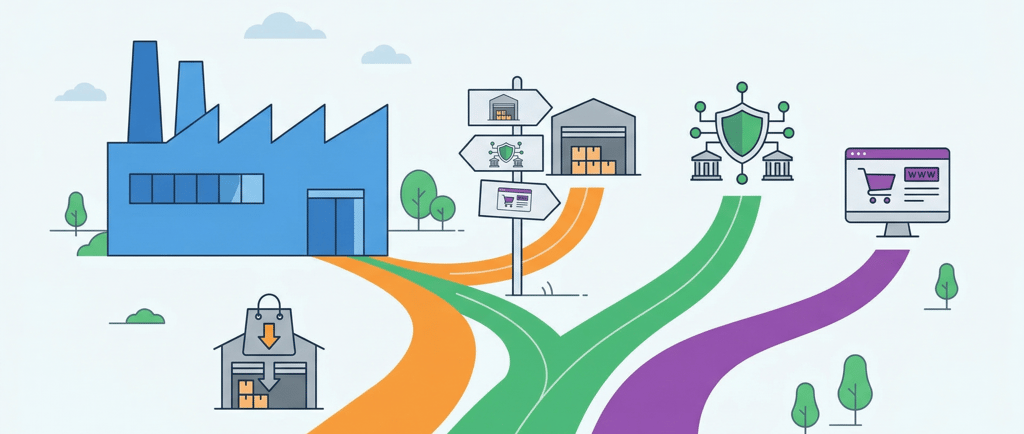
Blinkit, ONDC, or Your Own Website: What Should a Manufacturer Choose First?
When a manufacturer in Gujarat decides to go direct to the consumer, the first question is almost always the same: which channel do we start with?
It's the right question to ask. The answer depends on your margin, your product, and your existing operations. Here's an honest breakdown.
Your own D2C website: the right long-term answer, the wrong starting point for most
A branded website gives you everything — full margin, customer data, brand control, and direct relationship. It's the asset you're ultimately building toward if you're serious about D2C.
It's also the hardest place to start from zero. Without existing search traffic, social following, or customer awareness, a new manufacturer's website gets almost no organic visitors. Every order requires paid acquisition. And paid acquisition requires either budget or content marketing skill — usually both.
Manufacturers who succeed starting with their own website typically have one of three things: an existing loyal customer base they can convert to direct buying, a genuinely unique product that earns organic search traffic, or significant patience and budget to build brand awareness before expecting sales.
If you have one of those three, start here. If you don't, start somewhere with built-in traffic and migrate customers to your own channel over time.
Blinkit, Zepto, or Instamart: fastest to first sale, hardest to profit from
Quick commerce gives manufacturers immediate access to millions of daily active buyers. No need to build your own traffic. Products that work for impulse purchase or daily replenishment — packaged food, household essentials, personal care — can find genuine traction quickly.
The catch is margins. Platform fees of 20 to 25%, mandatory dark store inventory, listing costs of ₹25,000 per SKU per state, and advertising spend that becomes unavoidable as the platform matures — these add up to 35 to 50% of revenue going to the platform before you've touched your cost of goods.
For manufacturers in consumer products with 60%+ gross margin, this can still work. For industrial goods, commodity products, or anything under 50% gross margin, the economics are very difficult to make positive.
ONDC: the most overlooked option for manufacturers, specifically
The Open Network for Digital Commerce is worth serious attention from manufacturers who haven't looked at it recently.
Commission rates on ONDC are 3 to 5% — dramatically lower than any marketplace. There are no listing fees. Manufacturers can list products and reach customers through multiple buyer-facing apps (PhonePe's Pincode, Paytm, Magicpin) without being locked into one platform's terms.
The limitation is volume. ONDC's buyer-side apps don't yet have the daily active users of Amazon or Blinkit. For most categories, orders through ONDC are incremental — a welcome addition but not yet a primary channel.
However, for a manufacturer who wants to test direct sales with minimal upfront cost and low commission rates, ONDC is the lowest-risk starting point. Set up is relatively simple through an ONDC seller-side platform, the economics are favourable, and any orders that come through are genuinely profitable.
The honest recommendation
Start with ONDC or a marketplace (Amazon or Meesho, depending on your category and margin) to validate that direct consumers actually want your product at the price point you need. Use that period to build your product listing, photography, and customer feedback before investing in your own website.
Once you have 200 to 500 direct consumer orders and understand what's working, invest in building your own D2C site for the repeat customer relationship. The first-party data you've collected by then makes your website's marketing significantly more efficient.
The sequence matters. Most manufacturers skip the validation step and spend heavily on a website that gets no traffic. That's an expensive way to learn what a small ONDC test would have told you in six weeks.
[Talk to us about designing your direct sales entry →]